
502s from a full listen queue
PHP-FPM was not slow. Docker NAT to port 9000 dropped SYNs when the backlog hit 128.
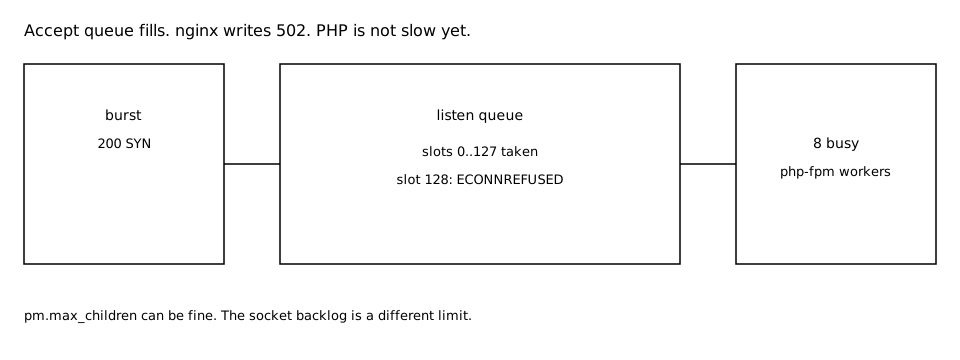
nginx returned 502 in short bursts. PHP-FPM slowlog was empty. The eight workers were busy, not stuck. ss -ltn on the php container showed Recv-Q sitting at 128 on 9000/tcp. New connections got ECONNREFUSED. That is a listen backlog, not an application timeout.
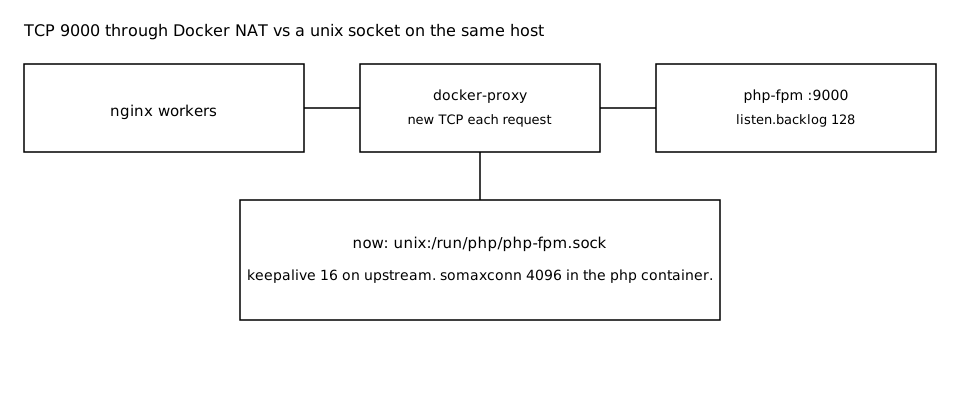
Compose published 9000 through docker-proxy. Each nginx request opened a fresh TCP connection. net.core.somaxconn inside the php image was 128. listen.backlog in the pool file could not grow past that. The NAT layer added latency, so the queue filled on a catalog stampede that Memcached later absorbed.
The problem was a full accept queue on docker-proxy, not slow Laravel. Visitors saw 502 while workers were about to free. I needed a unix socket, keepalive, and somaxconn that matched listen.backlog.
The socket
nginx and php share a volume with a unix socket. upstream uses keepalive 16. There is no docker-proxy on the hot path. somaxconn is 4096 in the php container. listen.backlog matches it. pm.max_children stayed at eight. That number was never the 502.
- error_log with connect() failed still means the backlog, not a fatal in Laravel.
- TCP 9000 remains for a host PHP that is not in Compose. The public site does not use it.
- queue and schedule containers talk to Redis, not to this socket.
The 502s stopped on the same traffic that used to fill Recv-Q. PHP-FPM time in the access log did not change. The change was how many handshakes waited on the floor.
What I took from this
Empty slowlog plus 502 is a socket problem until proven otherwise. Recv-Q at the listen limit is the proof.
docker-proxy plus a SYN per request is a queue you will fill on a stampede. Unix socket and keepalive take that queue off the floor.
Raising pm.max_children would have hidden Recv-Q until the host ran out of RAM. The backlog was the real limit.